Wednesday, November 13, 2013

Arriving Too Soon to a Theater Near You

            In recent remarks to the National Broadcasting Company, Secretary of State John Kerry expressed his dissatisfaction with the official stories of President Kennedy’s assassination.  On Sunday, November 10, 2013, N.B.C.’s David Gregory asked Kerry to elaborate on his statement that, “To this day, I have serious doubts that Lee Harvey Oswald acted alone.”  Understandably reluctant to be labelled a conspiracy theorist, Kerry refused to be drawn out; but it was still a telling exchange: 
            Kerry:  No.  I just have a point of view.  And I’m not going to get into that.  It’s — you know, it’s not something that I think needs to be commented on, and certainly not at this time.
            Gregory:  Do you think the conspiracy theories — his involvement with Russia, motivation from the Soviet Union or Cuba — are valid at some level?

            Unfortunately, but somewhat predictably, Gregory asked about foreign motivation for the murder.  Apparently, he is unaware that all of the crimes committed in support of the lone assassin story were perpetrated by domestic entities. 
            In 1963, murder of the President was not a federal offense; jurisdiction for the assassination rested in Texas.  Consequently, the removal of Kennedy’s body from Dallas was a crime.  The Russians didn’t do that; the Secret Service did.  The autopsy at Bethesda Naval Hospital, where the prosectors were ordered to remain silent on pain of court martial, was a crime; but the Navy did that, not the Cubans.  Gangsters didn’t make up the story about alleged assassin Lee Oswald going to Mexico City in September of 1963; the C.I.A. did that.  Those crimes, and many more, were committed to protect Kennedy’s killers. 
            In a nutshell, the official history of the crime goes like this.  “We’re innocent; it was that guy over there with the $3 rifle.”[1]  Millions of people found that claim to be ridiculous; so, a dozen years later, the perpetrators changed their alibi.  “We’re innocent, but we think the mob might have been involved.”
            The Warren Commission was an accessory after the fact to the murder of J.F.K.  The House Select Committee on Assassinations was an accessory after the fact to two murders — John Kennedy and Dr. Martin Luther King.
            The Commission and Committee stories are fairy tales.  Yet, some people who discounted the first story nevertheless bought the second version!  Author and syndicated radio and tv host Thom Hartmann is one of those people.  On November 12, 2013, Hartmann appeared with Amy Goodman on Democracy Now! and briefly discussed the assassination:
            Hartmann:  Yeah, yeah.  The — with virtual certainty, I can say that, you know, it was the mob who killed Jack Kennedy.  At that — in that context, I mean, there was involvement of others within our government and whatnot, but principally it was the mob…
             “[O]thers within our government and whatnot” were involved, but organized crime killed the President.  Hartmann is virtually certain of that. 
            He can’t explain the Magic Bullet Theory or the Magic Ammunition Clip Theory.  He doesn’t know where the spent shells found in the Texas School Book Depository went.  He can’t explain why x-rays of the President’s skull don’t show an entrance wound in the back of Kennedy’s head.  He can’t explain any details of the crime.  But he is virtually certain that gangsters did it.  His book, Legacy of Secrecy: The Long Shadow of the JFK Assassination, is being made into a movie starring Leonardo DiCaprio.
                        Goodman:  And when is the movie coming out?
                        Hartmann:  We’ll see.  Hopefully next year.


[1]  That’s not a joke.  The Mannlicher-Carcano rifle supposedly used in the shooting sold for three bucks wholesale.  “Oswald” bought it retail for twelve and change.

Labels: , , , , ,

Saturday, November 02, 2013

Stale Air

            The approaching anniversary of President Kennedy’s assassination was certain to bring with it new tales of how the U.S. intelligence apparatus did not kill him.  And sure enough, a new we-didn’t-do-it account of the murder landed in bookstores this fall — A Cruel and Shocking Act:  The Secret History of the Kennedy Assassination, by investigative reporter Philip Shenon. 
            Dave Davies interviewed Shenon for the N.P.R. program Fresh Air, broadcast on October 28, 2013.  Unfortunately, like many other interviewers on this topic, Davies apparently knows nothing of any importance about the case.  So when Shenon launched into the F.B.I.’s role in the investigation, Davies was unable to ask a single insightful question. 

            Shenon:  Very early on, I mean within 48 hours of the assassination, FBI Director J. Edgar Hoover determines in his own mind that Oswald acted alone, there was no conspiracy, there’s really not much to investigate here…

            In reality, Hoover had no doubt that there was a conspiracy.  
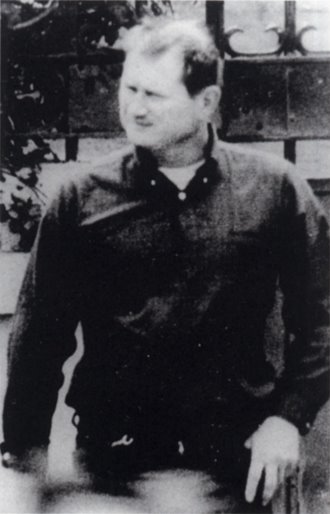
            The C.I.A. reported that Oswald went to Mexico City in September of 1963 and contacted the Cuban and Russian embassies.  The Agency had photos of “Oswald” in Mexico City and recordings of “Oswald’s” phone calls.  Within 48 hours of the assassination, President Johnson asked Hoover about that trip.

            Johnson:  Have you established any more about the visit to the Soviet Embassy in Mexico in September?
            Hoover:  No, that’s one angle that’s very confusing for this reason.  We have up here the tape and the photograph of the man who was at the Soviet Embassy using Oswald’s name.  That picture and the tape do not correspond to this man’s voice, nor to his appearance.  In other words, it appears that there is a second person who was at the Soviet Embassy down there[1]  (Italics added.)

(Left:  "Oswald" in Mexico City)
            Hoover had proof, photographs and tape recordings, that someone impersonated Oswald in Mexico City.  In September of 1963, Oswald was a nobody.  Why would someone want to impersonate him?
            In the interview, Shenon repeated one myth after another — that the missing autopsy photos were held by Robert Kennedy; that Jacqueline Kennedy chose to have the autopsy conducted at Bethesda Naval Hospital; that Jack Ruby insisted there was no conspiracy; that Oswald was under surveillance in Mexico City; that he met with a K.G.B. officer responsible for assassinations in the west; that the F.B.I and the C.I.A. didn’t connect the dots;[2] that the Zapruder film was a “clock of the assassination”; that Lyndon Johnson thought Fidel Castro was behind the murder…
            The only genuinely instructive part of the interview concerned the influence of Oliver Stone’s movie, JFK.  Public response to the movie prompted the President John F. Kennedy Assassination Records Collection Act of 1992 which resulted in the release of millions of pages of documents.  Shenon said that his own research benefitted from that material, but I find his assertion very hard to believe.
            Philip Shenon told N.P.R. that the destruction of evidence in the case was a major theme of his book.  The F.B.I. and the C.I.A. lied about the crime, but they only did so because they had failed to prevent the assassination and wanted to cover their butts.  There was no conspiracy. 
            I would remind investigative reporter Philip Shenon that the removal of President Kennedy’s body from Dallas was a crime.  The autopsy was a crime.  The destruction of evidence was a crime.  The fabrication of evidence was a crime.  The federal government didn’t have jurisdiction in the case and the Warren Commission didn’t have the legal authority to classify evidence, so that entire process was a crime.  Thank goodness there was no conspiracy!  I’d hate to think all those crimes were committed to protect Kennedy’s killers.


[1]  Deb Reichmann, “Oswald no longer thought to be voice on tape,” Chicago Sun-Times, 11/22/1999, p. 20.  Reichmann’s title was a bit odd; Oswald was never thought to be the voice on those tapes.  Intelligence analyst John Newman quoted the same phone call between Johnson and Hoover in his 1995 book, Oswald and the CIA.
[2]  The C.I.A. absolutely connected the dots in Mexico City because they invented those dots.  C.I.A. officer David Atlee Phillips admitted in 1978 that there was no evidence Oswald was photographed in Mexico City or that he visited the Soviet Embassy.  In fact, there is no evidence that he went to Mexico City at all.

Labels: , , , , , ,

Wednesday, January 11, 2006

The Mexican Mystery Tour

Recently, a few people have asked me about a new film, Rendezvous with Death, concerning the assassination of President John Kennedy. According to filmmaker Wilfried Huismann, Lee Harvey Oswald either volunteered or was recruited to help Cuban intelligence kill Kennedy. Seven weeks before the murder, Oswald went to Mexico City where he met a Cuban agent and was paid $6,500. The assassination investigation was short-circuited out of fear that the public would clamor for war when they learned Castro was behind the crime.

There is, of course, a big problem with that explanation: There is no evidence that Lee Oswald killed anybody.

The stories of Oswald in Mexico City are as baseless as every other aspect of the lone assassin fairytale. Supposedly, the Central Intelligence Agency photographed Oswald when he visited the Russian and Cuban embassies. But the photo of “Oswald” disclosed by the C.I.A. (left) looks nothing like Oswald. Supposedly, the C.I.A. intercepted and recorded Oswald’s telephone calls to the embassies. But after the assassination, when F.B.I. agents who had interrogated Oswald heard the Mexico City tapes, they unanimously agreed that the voice on the tapes was not Oswald’s.

The claim that Oswald was paid $6,500 came from a man identified only as “D” by the Warren Commission. “D” said that in September of 1963, he overheard a conversation in the Cuban embassy between two men, one “a tall, thin Negro with reddish hair, obviously dyed, who spoke rapidly in Spanish and English...” “D” identified the second man as Oswald. They were joined by a third man, a Cuban, who handed money to the Negro as Oswald listened to the Negro’s claim that he wanted “to kill the man”:

Oswald replied, “You’re not man enough, I can do it.” The Negro then said in Spanish, “I can’t go with you, I have a lot to do.” Oswald replied, “The people are waiting for me back there.” The Negro then gave Oswald $6,500 in large-denomination American bills, saying, “This isn’t much.” (Warren Report, pp. 307-308)

Mexican authorities, however, told the U.S. that “D” had admitted his story was a fabrication. Reportedly, “D” said that he had never seen Oswald anywhere and that his account was intended to facilitate his entry into the U.S. so he could participate in operations against Castro. He hoped his story would prompt the U.S. to “take action” against Castro.

“D” insisted that his retraction was coerced by the Mexicans. But the alleged date of his Oswald sighting, September 17 or 18, was ruled out by evidence that Oswald was in Louisiana on those dates. Besides, Oswald spoke English and Russian. How could he have had such a conversation in Spanish? And why would Castro’s agents meet Oswald at the consulate, which they would expect to be under surveillance? To further complicate matters, “D” turned out to be a Nicaraguan intelligence agent named Gilberto Alvarado Ugarte. In 1963, Nicaragua was under the thumb of Anastasio Somoza, who enjoyed the support of the U.S.

Although the Warren Commission rejected “D’s” account of Oswald and the Cubans, the Commission adopted a version of that same story involving Oswald and the Russians later in September. Credible eyewitness testimony indicated that Oswald was in Dallas at that time, not Mexico City; but the Warren Commission was undeterred. Oswald, it was said, may have met Valeriy Vladimirovich Kostikov, reportedly in charge of assassinations in the Western Hemisphere — which brings us to another absurdity from Huismann’s film. The investigation, it is claimed, was cut short because of concerns that if the public learned of Cuba’s role in the assassination, they would demand retaliation that could lead to war. Nevertheless, the Commission pondered the far more dangerous possibility of Russian involvement in the murder.

Some Cubans were certainly connected to the assassination, but they were anti-Castro Cubans, not pro-Castro Cubans. And there are still more problems with the Mexican Mystery Tour, but I won’t detail them here. I will simply close with a conversation between President Lyndon Baines Johnson and F.B.I. Director John Edgar Hoover on the very day of the assassination. Johnson asked if there was any new information about Oswald’s trip to Mexico, and Hoover replied:

No, that’s one angle that’s very confusing for this reason. We have up here the tape and the photograph of the man who was at the Soviet Embassy using Oswald’s name. That picture and the tape do not correspond to this man’s [Oswald’s] voice, nor to his appearance. In other words, it appears that there is a second person who was at the Soviet Embassy down there

Really? Someone was impersonating Oswald? Whatever for?

Labels: , , , , , ,