George
Wilcken Romney was born in Mexico in 1907.
When he was five years old, his family fled the revolution and moved to
the United States. They lived in Utah
during the Great Depression and, like millions of Americans, struggled to make
ends meet. George Romney’s career in the
auto industry began in 1939, when he moved to Detroit. In World War II, he lead efforts to share
production improvements. In 1948, he
joined Nash-Kelvinator, which became the American Motors Corporation six years
later, with Romney as CEO.
In 1962, he
ran for governor in Michigan. Naturally,
during the campaign, his wife was interviewed.
Interviewer: You mentioned the people — why do some think
he’s a man of considerable means who really doesn’t care about people?
Lenore Romney: You know, we’ve only owned our home for the
last four years. He was a refugee from
Mexico who was on relief, welfare relief for the first years of his life. But this great country gave him
opportunities. His family were poor; he
was poor; he said they lived for a year on nothing but potatoes. He’s known what it is to have to work for
every dime he’s had since he was twelve.
Today,
Lenore’s youngest son is running for the presidency of the United States.
George
Romney served as Secretary of Housing and Urban Development in President
Richard Milhous Nixon’s first term. Facing
resistance from the President, Romney nevertheless wanted to increase housing
production for the poor; he pursued open housing and desegregation.
Today, George
Romney’s youngest son is running for the presidency of the United States.
Well, you
know what they say: “Unlike father, unlike
son.”
On March
23, 1980, archbishop Oscar Romero called upon the El Salvadoran military to
refuse orders to attack and kill their fellow citizens. The next day, while celebrating Mass, Romero
was assassinated by a shot to the heart.
Central
America has long been a favorite target of the United States, and the region
was particularly hellish during the presidency of Ronald Reagan. The U.S. supported terrorists in Guatemala,
Nicaragua, El Salvador, and elsewhere.
In 1981, Robert White, the U.S. ambassador to El Salvador, named two
brothers from a ruling family in El Salvador as part of a group in Miami
funding the death squads. For that
action, White lost his job.
Why revisit
the past? Because in 1983, when Willard
Mitford Romney joined Bain & Company to head the new Bain Capitol private
equity firm, he turned to Central America for investors. The oligarchs provided 40% of Bain’s initial
funding. According to the Huffington Post:
The connection between the families
involved with Bain’s founding and those who financed death squads was made by
the Boston Globe in 1994 and the Salt Lake Tribune in 1999. This election cycle, Salon first raised the issue in January, and the Los Angeles Times filled out more of the
record earlier this month.[1]
Reportedly,
Romney was concerned about unsavory aspects of the ruling families. He had his new investors checked out and was
told that they had no connections to drug trafficking or death squads. Reportedly, he believed that story — which is
a bit like buying whiskey in Chicago during Prohibition after being assured
that no gangsters were behind the operation.
The last
thirty seconds of the audio file below come from a recording made by a Sister
in the chapel when Romero was murdered.
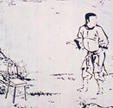
In Buddhist art, the Ox-Herding Pictures tell the story of enlightenment: A man searches for his missing ox, finds it, and returns home. If your ox disappears, you might think it wandered off on its own; but if your chair disappears, that thought doesn’t spring to mind. So, I have painted the Chair-Herding Pictures — a detail from the first picture, Losing the Chair, graces this page. The Chair-Herding Pictures are about following the tracks of consciousness.
My name is Jerrold Smith. I’m a free lance human being, living in Chicago.