24
Even if you’ve never seen the tv series 24, you can easily grasp the idea behind it. A terrorist group is planning to unleash a deadly attack within the next 24 hours. Starting with scanty intelligence, U.S. security agencies are in a race against time; and counter-terrorism agent Jack Bauer will take any action necessary — including torture — to get the information he needs to protect our country.
The ticking time bomb story has become a staple of right-wing political discourse. The Bush team used it to justify the invasion of Iraq by warning that we couldn’t wait for proof of Iraqi weapons programs to come in the form of a mushroom cloud. Why, to hear the administration tell it, we may be forced to invade Iran soon for the very same reason.
The notion of impending calamity is routinely enlisted to support a range of policies and procedures. And the context is always described in numbingly familiar terms: We have no time to lose; we must act even if the consequences are uncertain because the threat, however nebulous, is dire.
It certainly makes exciting television, with a cliff-hanger every 60 minutes. The real world, however, usually doesn’t follow the script.
Ten months ago, I wrote about Alfred McCoy’s appearance on Democracy Now, when he talked about techniques of torture. McCoy is the J.R.W. Smail Professor of History at the University of Wisconsin in Madison, and he is the author of A Question of Torture: CIA Interrogation from the Cold War to the War on Terror. Later, I worked on a review of a book by Sam Harris titled The End of Faith, which offers an argument for torture. In October of 2006, my study came full circle when I found “The Myth of the Ticking Time Bomb,” an article by McCoy in The Progressive.
Harris’s account is a version of the ticking-time bomb story described by Professor Allen Dershowitz, of Harvard Law School. Authorities have captured a terrorist with information about a nuclear device set to detonate in New York City. The suspect won’t talk and time is running out. Who could doubt that torture would be justified?
From there, Dershowitz asks if it wouldn’t be better for torture to be permissible under a regulatory warrant. Such warrants, issued by officials acting on the record, would simultaneously meet our intelligence needs while limiting abuse of torture. After all, duly constituted figures would never authorize the sort of methods employed at abu Ghraib, would they?
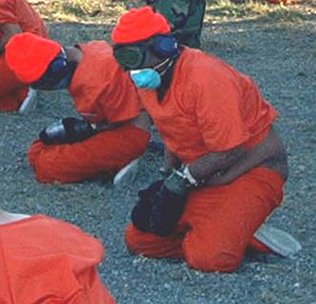
Unfortunately, experience has shown that Dershowitz’s faith in government officers is misplaced. George Bush, Jr. ordered the C.I.A. to establish secret prisons to circumvent U.S. law. If torture warrants proscribed certain practices, what would prevent a second dose of secrecy to get around those restrictions?
In The Progressive, Alfred McCoy deconstructs the ticking time bomb logic. First, he writes, the story rests on a number of unstated assumptions about the nature of intelligence work. Several improbable circumstances must arise for the Dershowitzian torture scenario to develop.
Second, the story assumes that useful intelligence can be gathered by employing torture. Over the centuries, however, that simply hasn’t been the case. Nearly two thousand years ago, Roman jurist Ulpian noted that the strong will resist and the weak will say anything to stop the pain. Christians once used torture to extract amazing confessions of witchcraft even though there are no witches.
Third, and perhaps most important in the current political environment, the torture of one suspect quickly becomes a rationale for torturing others. That progression occurred in the Battle of Algiers, when the French arrested one third of the male population of the Casbah and subjected most of them to torture. Arrest enough people and you do increase your chances of catching a bad guy. The French also summarily executed 3000 captives. They broke the resistance in Algiers and were nevertheless defeated. The C.I.A.’s Phoenix program in Vietnam produced tens of thousands of deaths. Nevertheless, Vietnam won.
Which leads to the fourth point in McCoy’s article: the political price of coercion. Torture undermines domestic and international support for the war whether it is in Algeria, Vietnam, or Iraq. Torture tells the world that the torturers deserve to be attacked.
McCoy’s fifth point addresses an unexpected motive behind the push for torture. Ironically, it was outlined in a Cold War C.I.A. document about Russia.
When feelings of insecurity develop within those holding power, they become increasingly suspicious and put great pressures upon the secret police to obtain arrests and confessions. At such times, police officials are inclined to condone anything which produces a speedy “confession,” and brutality may become widespread.
Viewed from that perspective, Bush’s authorization of torture may tell us more about his psychological makeup than our actual security needs.
The U.S. now holds hundreds of prisoners of no particular importance. The administration is reluctant to free them because they will reveal what they have endured, and that will damage U.S. prestige for years to come. Detaining them indefinitely blatantly violates the precepts we are supposedly defending. The solution in Vietnam, if it could be called that, was pump and dump. Find out what the detainee knows, even if it is useless, and then kill him.
Torture, “legal” or otherwise, always invites killing. The conclusion, item number six in McCoy’s account, is grim. If we will not renounce torture, then we must
____________________
The ticking time bomb story has become a staple of right-wing political discourse. The Bush team used it to justify the invasion of Iraq by warning that we couldn’t wait for proof of Iraqi weapons programs to come in the form of a mushroom cloud. Why, to hear the administration tell it, we may be forced to invade Iran soon for the very same reason.
The notion of impending calamity is routinely enlisted to support a range of policies and procedures. And the context is always described in numbingly familiar terms: We have no time to lose; we must act even if the consequences are uncertain because the threat, however nebulous, is dire.
It certainly makes exciting television, with a cliff-hanger every 60 minutes. The real world, however, usually doesn’t follow the script.
Ten months ago, I wrote about Alfred McCoy’s appearance on Democracy Now, when he talked about techniques of torture. McCoy is the J.R.W. Smail Professor of History at the University of Wisconsin in Madison, and he is the author of A Question of Torture: CIA Interrogation from the Cold War to the War on Terror. Later, I worked on a review of a book by Sam Harris titled The End of Faith, which offers an argument for torture. In October of 2006, my study came full circle when I found “The Myth of the Ticking Time Bomb,” an article by McCoy in The Progressive.
Harris’s account is a version of the ticking-time bomb story described by Professor Allen Dershowitz, of Harvard Law School. Authorities have captured a terrorist with information about a nuclear device set to detonate in New York City. The suspect won’t talk and time is running out. Who could doubt that torture would be justified?
From there, Dershowitz asks if it wouldn’t be better for torture to be permissible under a regulatory warrant. Such warrants, issued by officials acting on the record, would simultaneously meet our intelligence needs while limiting abuse of torture. After all, duly constituted figures would never authorize the sort of methods employed at abu Ghraib, would they?
Unfortunately, experience has shown that Dershowitz’s faith in government officers is misplaced. George Bush, Jr. ordered the C.I.A. to establish secret prisons to circumvent U.S. law. If torture warrants proscribed certain practices, what would prevent a second dose of secrecy to get around those restrictions?
In The Progressive, Alfred McCoy deconstructs the ticking time bomb logic. First, he writes, the story rests on a number of unstated assumptions about the nature of intelligence work. Several improbable circumstances must arise for the Dershowitzian torture scenario to develop.
Second, the story assumes that useful intelligence can be gathered by employing torture. Over the centuries, however, that simply hasn’t been the case. Nearly two thousand years ago, Roman jurist Ulpian noted that the strong will resist and the weak will say anything to stop the pain. Christians once used torture to extract amazing confessions of witchcraft even though there are no witches.
Third, and perhaps most important in the current political environment, the torture of one suspect quickly becomes a rationale for torturing others. That progression occurred in the Battle of Algiers, when the French arrested one third of the male population of the Casbah and subjected most of them to torture. Arrest enough people and you do increase your chances of catching a bad guy. The French also summarily executed 3000 captives. They broke the resistance in Algiers and were nevertheless defeated. The C.I.A.’s Phoenix program in Vietnam produced tens of thousands of deaths. Nevertheless, Vietnam won.
So the choices are clear. Major success from limited, surgical torture is a fable, a fiction. But mass torture of thousands of suspects, some guilty, most innocent, can produce some useful intelligence…but at what cost?
—Alfred W. McCoy
—Alfred W. McCoy
Which leads to the fourth point in McCoy’s article: the political price of coercion. Torture undermines domestic and international support for the war whether it is in Algeria, Vietnam, or Iraq. Torture tells the world that the torturers deserve to be attacked.
McCoy’s fifth point addresses an unexpected motive behind the push for torture. Ironically, it was outlined in a Cold War C.I.A. document about Russia.
When feelings of insecurity develop within those holding power, they become increasingly suspicious and put great pressures upon the secret police to obtain arrests and confessions. At such times, police officials are inclined to condone anything which produces a speedy “confession,” and brutality may become widespread.
Viewed from that perspective, Bush’s authorization of torture may tell us more about his psychological makeup than our actual security needs.
The U.S. now holds hundreds of prisoners of no particular importance. The administration is reluctant to free them because they will reveal what they have endured, and that will damage U.S. prestige for years to come. Detaining them indefinitely blatantly violates the precepts we are supposedly defending. The solution in Vietnam, if it could be called that, was pump and dump. Find out what the detainee knows, even if it is useless, and then kill him.
Torture, “legal” or otherwise, always invites killing. The conclusion, item number six in McCoy’s account, is grim. If we will not renounce torture, then we must
…either legalize this brutality, à la Dershowitz and Bush, or accept that the logical corollary to state-sanctioned torture is state-sponsored murder, à la Vietnam.
____________________
Labels: Alfred McCoy, Allen Dershowitz, Battle of Algiers, Operation Phoenix, Sam Harris, torture, Vietnam
posted by Jerrold Smith at 5:35 AM
0 comments