They were Christians in the ordinary sense. They believed that Jesus is the son of god and he is in heaven. They believed in Biblical prophecies concerning end times and salvation. In particular, they studied Revelations, which tells of a great book at the hand of god, bound with seven seals. Only the Lamb of God can open the last seal.
They believed that seven messiahs would come before the end of the world, and the last would be the sinful messiah. That did not mean he would deliberately sin. It simply meant that, unlike Jesus, the seventh messiah would not be without sin. He would be an ordinary man, born into sin as we all are. He will father twenty-four children who will fall to the armies of Babylon. They will be killed by fire and will preside as angels in heaven.
I don’t hold any of those beliefs; I think they’re all nonsense. But the Branch Davidians had a right to their beliefs.
Like thousands of people in Texas, they bought and sold guns. There’s a lot of money to be made buying weapons which appreciate in value; and there are a lot of gun dealers in Texas. All gun dealers “stockpile” weapons; that stockpile is called an inventory. Many of the Davidian neighbors owned multiple weapons. Furthermore, when Jesus was arrested, he told his followers not to resist. But he also said that henceforth, he who was without a sword should take up a sword.
I think that story is ridiculous. But under the Constitution, Davidians had the right to believe it; and they had the right to keep and bear arms.
Congressional budget hearings were approaching. The Bureau of Alcohol, Tobacco, and Firearms was planning a dramatic raid to demonstrate how vital the Bureau was to the security of the nation. They were investigating a Christian commune in Texas that sold firearms. On February 28, 1993, the B.A.T.F. was not outgunned. They had three helicopters carrying armed men; they had nearly eighty men armed and armored. They had video cameras and fax machines. They had media contact phone numbers. They were ready.
Incredibly, however, they didn’t have contact information for ambulances or hospitals. When the B.A.T.F. took casualties, they had to ask a reporter to call for help. They simply never imagined they would meet resistance. After all, they were only serving a search warrant. There were no charges at that point, and the Bureau had already avoided an opportunity to inspect the suspect premises. They were going to search Mount Carmel, and they were going to get it on tape.
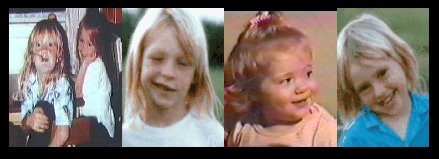
The Davidians had lived at Mount Carmel for decades; some had been born and raised there. Some had left home, as children do, and some had returned. Some were white; some were black. Wayne Martin, one of the first black graduates of Harvard law school, lived at Mount Carmel. A family of six had moved from England to Waco to learn about the seven seals. There were grandmothers and grandfathers at Mount Carmel. As a “branch” of Seventh Day Adventists (“advent” meaning the second coming of Christ), the Davidians didn’t feed their children junk food or sit around the tv. When lots of people live together, they need a big kitchen; they have to do laundry. The Davidians recycled material from old 1950s cottages on the site and built a large home. They added a small gymnasium which did additional duty as a church and a rehearsal space. On February 28, approximately 130 Davidians lived at Mount Carmel. When the B.A.T.F. attacked, Wayne Martin called 9-1-1.
Vernon Howell, also known as David Koresh, was the spiritual leader of the Davidians. The B.A.T.F. could have detained him on one of his trips into town, but they didn’t. For that matter, a Davidian neighbor who seemed to have an interest in Davidian beliefs was, in fact, an undercover B.A.T.F. agent named Robert Rodriguez. He was at Mount Carmel on February 28, and he left shortly before the raid in an effort to stop it.
Four agents and two Davidians were killed outright in the raid. Another died of his wounds; another was later killed in a field some distance from the home. The Davidians were charged with the murder of federal agents. The F.B.I. took over the investigation and the crime scene. Some Davidians surrendered to authorities, or surrendered their children to safe care. Others did not.
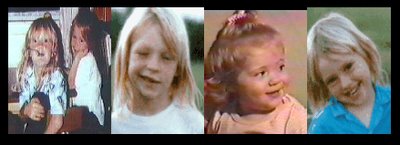
On April 19, 1993, fire consumed Mount Carmel. Nine Davidians escaped the flames. Seventy-six others, including a score of children, did not.
Eleven Davidians were subsequently tried and acquitted of murder and conspiracy to commit murder. If you don’t recall the blaring headlines — “Davidians not guilty!” — that could be because there were no such headlines. The acquittals seemingly didn’t merit much coverage.
____________________
Labels: Branch Davidians, Bureau of Alcohol Tobacco and Firearms, David Koresh, Federal Bureau of Investigation, Waco